Osaka street food, explained — the complete guide
Osaka’s street food runs ¥500–1,000 a dish across three districts — Dotonbori, Shinsekai and Kuromon Market — and the six guided tours worth booking cost $42–$169 for 2–3 hours and 5–15 tastings. This is the whole picture, from a local who spent six years behind a kushikatsu fryer.
Osaka calls itself the kitchen of Japan, and for good reason. The food culture has a name — kuidaore, eat till you drop — and it’s not an exaggeration. But here’s what first-timers get wrong: the famous Glico-sign stretch of Dotonbori is a shoulder-to-shoulder tourist crush where you queue 40 minutes for takoyaki that locals wouldn’t queue 4 minutes for. The food that made Osaka famous is one train stop or one backstreet away.
Why Osaka out-eats Tokyo
Tokyo is a restaurant-first city: you dress up, book a table, sit and be served. Osaka is a stall-first city. Stand at a counter, order in broken Japanese, stand and eat. The dishes are cheaper (¥500–¥1,000 each), the portions are brutal, and the idea is to try fifteen things in one night, not one thing for an hour. A Tokyo food tour teaches you about technique; an Osaka food tour teaches you the arithmetic of kuidaore: how much food fits in three hours, why the guide orders before the dishes arrive, and why the 80% rule (stopping at eight parts full) exists.
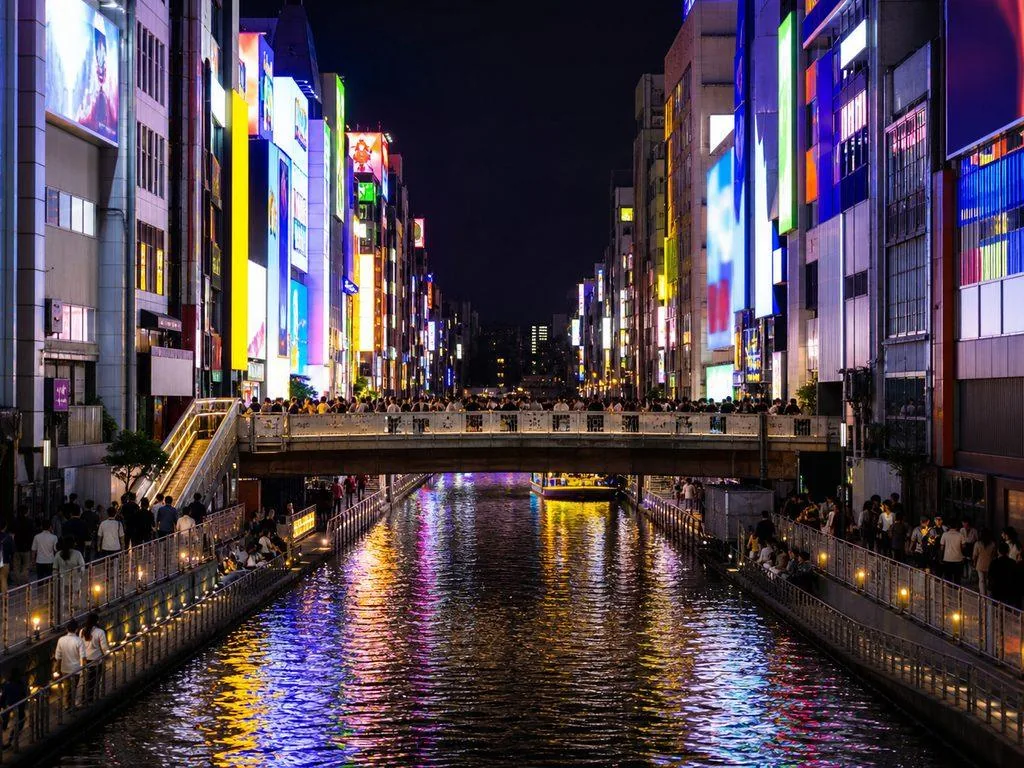
The three food districts and what they do best
Dotonbori is the neon canal strip, famous worldwide, and the place most tour operators park the coach. It’s crowded in the day and electric at night. The Glico Running Man sign has hung there since 1935; posing with arms raised beneath it is the standard photo. But lines are 40 minutes for takoyaki that’s no better than Shinsekai’s for a fifth of the queue.
Shinsekai (“New World”) is the retro district around the 103 m Tsutenkaku Tower. This is where kushikatsu was born in 1929 (the Daruma chain traces there). The eight-seat counters have no English menus. Cash only. The food is local, cheap, and the iron rule is no double-dipping in the shared sauce tub. Every good food tour spends 45 minutes here.
Kuromon Ichiba Market — literally “Osaka’s kitchen” — is a roughly 190-year-old covered market with about 150 stalls. Restaurant chefs buy their fish here at 6am. Most stalls wind down late afternoon. A morning tour covers wagyu sampling, mochi, seafood crackers, and the energy of a working market.
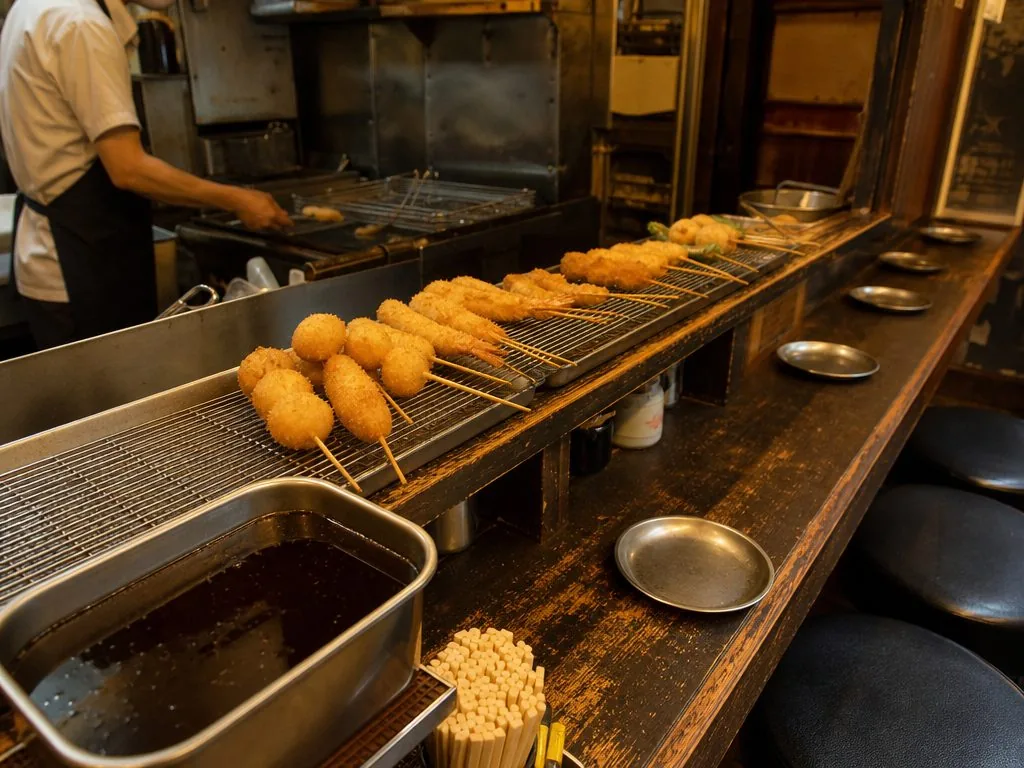
The three dishes and the etiquette around them
Takoyaki — chunks of octopus leg in batter, cooked in a special round mould — is Osaka’s most famous dish, invented here in 1935. Takoyaki stalls serve six to eight balls for ¥500–700 ($4.60–$6.50). Every tour hits at least one.
Okonomiyaki is the savory cabbage-and-batter pancake grilled on a teppan. You usually cook it yourself on the hot iron grill, which is half the point — participation, not passivity. One dotonbori-foodie tour includes it.
Kushikatsu — skewered, panko-breaded, deep-fried meat and vegetables — is Shinsekai’s signature. The unforgivable sin: double-dipping the skewer in communal sauce. Use it once, that’s it. Respect this and you’ll be fine.
Eating while walking is frowned on. Stand at the stall, use the counter, or sit. Finish what you order; leaving rice is considered wasteful. Hara hachi bu me — the 80% rule — is the old Confucian habit of stopping at eight parts full. On a 15-dish tour, it’s the difference between happy and miserable.
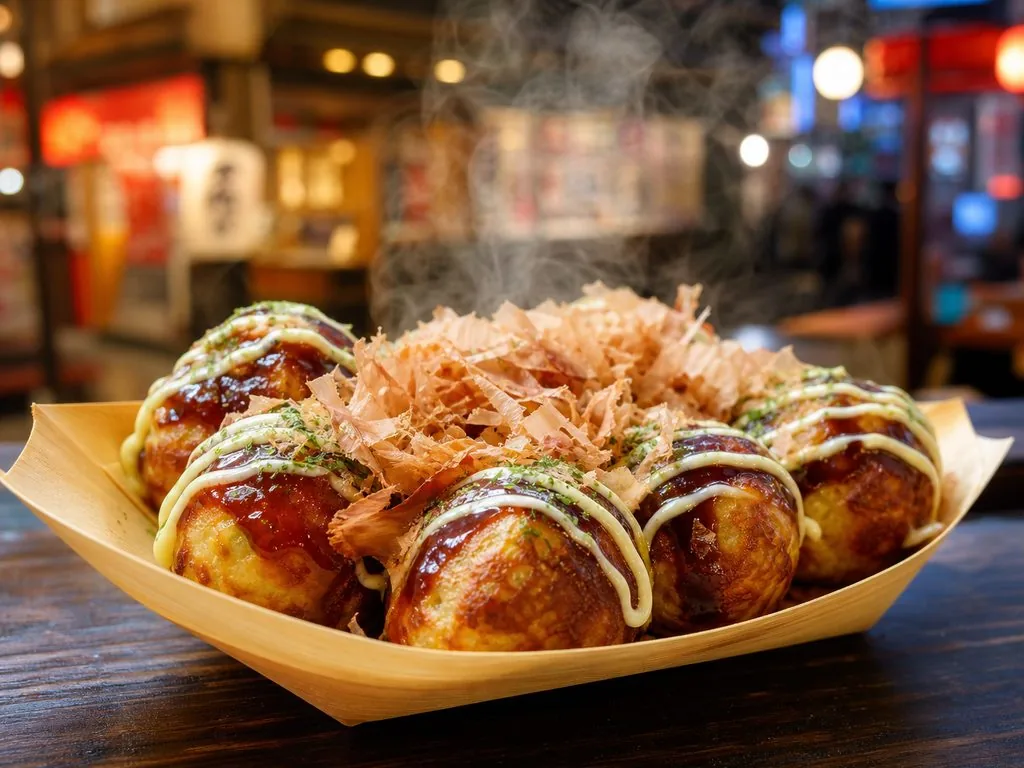
What a tour actually buys: the arithmetic
Street food costs ¥500–¥1,000 per dish — so DIY is cheaper on paper. So what does a $60 tour buy? The guide. The eight-seat rooms with no English menu. The ordering. The history. You cannot walk into a Shinsekai counter alone and get 15 dishes in three hours unless you already know what to order and the counter owner speaks English. Most don’t. A tour gets you past the rope line of English menus and into the real Osaka. That’s the price premium.
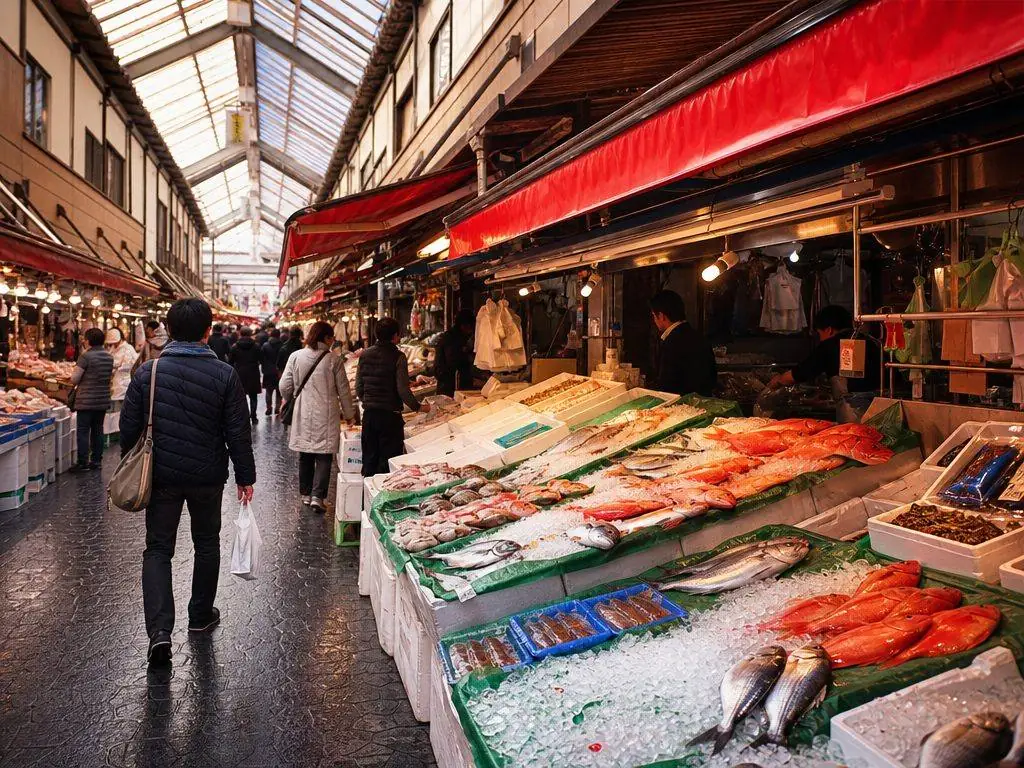
How to choose between the six tours
Start with the flagship evening tour ($60). Fifteen dishes, five stops, 2,658 reviews, 4.8 stars. It’s the most popular food tour in Osaka seven years straight (operator’s claim). If you want top ratings, the Shinsekai specialist is $69 and rates 4.9. On a budget, the Kuromon Market walk is $42 and covers wagyu, seafood, takoyaki and mochi in two hours. Want to drink? The Namba bar-hopping tour is $108 and covers three izakaya with 3–4 drinks. Private custom ($169) suits dietary needs and your own pace; the catch is the 4.3 rating — book an early start, not 8pm, when famous spots have queues and close early.
Timing, crowds and the five-six rule
Tours run rain or shine. Best months are March–May and October–November. Avoid mid-June to mid-July (rainy season), August (heat and humidity), and August–September (typhoons). Dotonbori peaks 10:30am to 3pm with up to 10,000 visitors on peak days — early morning or evening tours dodge the crush. Kuromon Market is a morning place; by 3pm most stalls have wound down. Evening food tours typically start 5–6pm and run about three hours. Small-group means roughly 8–12 guests. Cash still rules at stalls and small counters; many take no cards.
The bottom line
Osaka’s street food is the real thing, and a guide is worth the money here more than almost anywhere in Japan. The best rooms have eight seats and no English menu; the guide is your translator and your access. Skip the queue on the bridge, eat where the eight-seat counters are, and know that kuidaore doesn’t mean eat until sick — it means eat until satisfied, which on a well-paced tour is exactly what happens.
Ready to book?
The flagship 15-dish tour is $60 and books out on spring and autumn weekends — check dates below, or compare all six on the tours page.
Frequently asked questions
What is the best street food tour in Osaka?
For most people, the $60 15-dish flagship with 2,658 reviews at 4.8. Ratings purists pick the 4.9-rated Hungry Osaka tour ($69); the $42 wagyu walk is the cheapest way in. Full verdict on the best-tour page.
How much does street food cost in Osaka?
Dishes run ¥500–1,000 ($4.60–9.25) at stalls — takoyaki is usually 6–8 balls for ¥500–700. Guided tours cost $42–$169; the arithmetic of what that buys is on the cost page.
Where is the main food street in Osaka?
Dotonbori, the canal-side neon strip — but the better eating is one street back in Ura-Namba or one train stop away in Shinsekai. See Dotonbori or Shinsekai and where locals eat.